Monitor arm for a 32 in screen
A 32-inch panel is not a slightly larger 27. It is a different weight class, a wider slab of glass, and a viewing distance that a 16–20 in (40–50 cm) rented top does not provide on its own.
The narrow-desk arm guide is about clamp, wall gap, and tip risk on 15.7–19.7 in depths. This page is about the 32 in class: kilograms, VESA, and whether the room can sit that glass at all.
What “32 inch class” means here
Use ≈. Read your manual.
| Fact | Typical public range | Why it matters |
|---|---|---|
| Diagonal | 31.5–32 in class | Marketing number. Do not shop arms by inches alone. |
| Glass + bezel width | ~28–29.5 in (71–75 cm) | Fits many 40–48 in leftovers; still not dual. |
| Weight | often ~12–18 lb (5.5–8.2 kg), sometimes more with a thick stand | The arm’s max and min must both fit. |
| VESA | commonly 100 × 100 mm; some 75 × 75 | No holes, no arm without extra plates (added weight). |
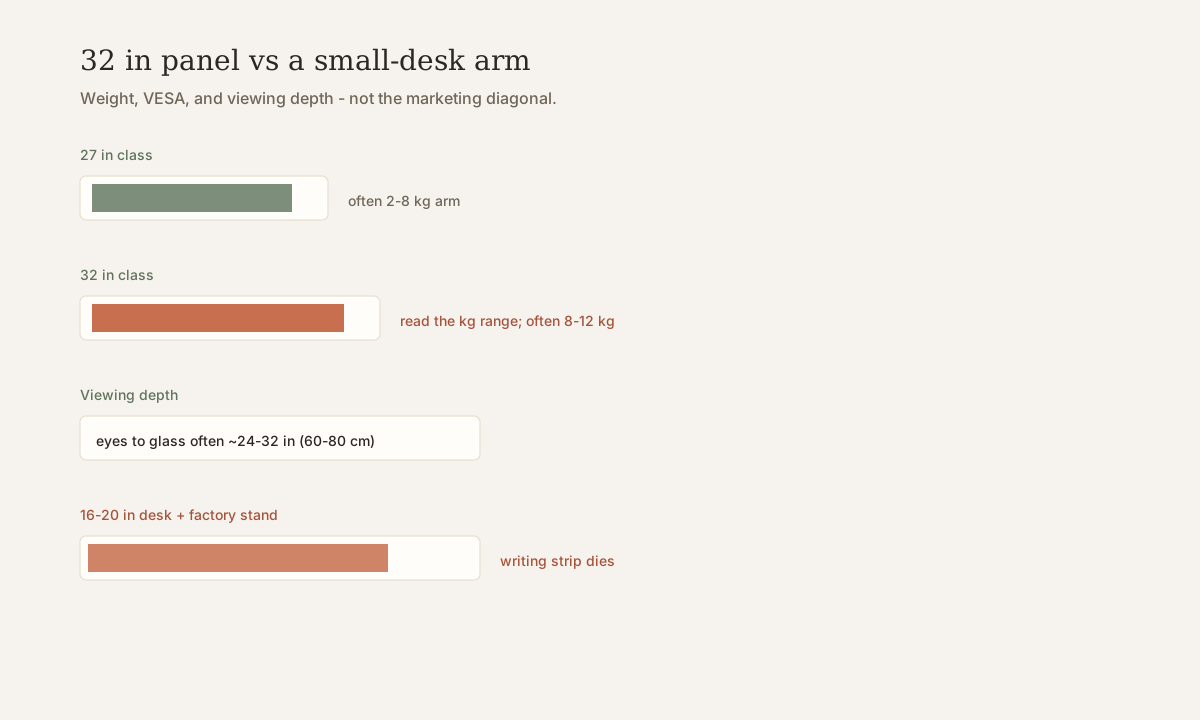
A 27 in panel is often ~24–25 in (61–63 cm) wide and light enough for a 2–8 kg gas arm. A 32 in panel can sit at the top of that range or above it. Treat “fits 32 inch” marketing as a hint, not a spec.
Three 32 in fails on a small desk
1. The arm is a 27 in arm. Gas springs have a window. Too heavy and the screen sinks. Too light and it floats. If your 32 in panel is 9 kg with the plate and the arm tops out at 8 kg, the listing photo will not save you.
2. The factory stand stays. A 32 in stand is a deep footprint. On a 16–20 in top it eats the writing strip. An arm only helps if the clamp, wall gap, and tip tests on the narrow-desk page still pass.
3. You sit too close. A useful eyes-to-glass distance for this class is often on the order of 24–32 in (60–80 cm). That is a chair-and-posture number, not a medical rule. If the bed or sofa pins you 18 in from the glass, a bigger panel is glare and neck, not “more screen.”
Width vs leftover wall
A single 32 in panel can physically sit on a 45–48 in leftover if you accept a tight lamp. It does not sit well on a 36–39 in leftover. Pair this with small desk under 48 in and desk width vs monitor size (that table stops at 27 / ultrawide — this page is the 32 in row).
Ultrawide 34 in is wider still (~31.5–32.3 in / 80–82 cm of glass). Do not use this page as permission for an ultrawide on a 40 in wall.
Clamp and construction (same vetoes, higher stakes)
Everything on the narrow-desk page still applies, louder:
- Glass top: do not clamp.
- Hollow-core / thin veneer: a heavier panel is a bigger crush and tip risk.
- 0–2 in (0–5 cm) wall gap: the elbow still needs somewhere to fold. A 32 in slab is a longer lever when you swing it.
- Grommet hole: stable, and it leaves a hole. Renters who must return the top unmarked should treat a new hole as a no.
If the desk rocks with the factory stand, an arm makes the lever worse.
When a 32 in arm is the right tool
- You already own the panel and will not downsize.
- The leftover wall is ≥ 45 in and rollback is honest.
- The arm’s printed range covers your weight, including VESA plate.
- You will use the motion: push the glass to the wall to write, or turn it at night in a bedroom (bedroom desk).
If you do not yet own the panel, a 27 in on a 2–8 kg arm is the calmer small-desk default — one monitor, intentional.
Named example (criteria first)
Heavy gas-spring arm, 8–12 kg / 32 in listing class. Search US listings for a single arm with a printed kilogram range that covers your manual, C-clamp in about 0.4–3.1 in (10–80 mm), VESA 75/100. Skip dual-arm kits on a 31–47 in leftover. Confirm the live spec. Our constraint score is editorial, not a star average.
The lighter 2–8 kg class stays the pick for 24–27 in panels.
Skip if
- You have not weighed or read the monitor.
- Depth is 16–20 in and you refuse to sit back or use an arm.
- The leftover is under ~40 in.
- You wanted two 32 in panels. That is a different apartment.
Measure the wall. Read both manuals. Then clamp — or do not.
Quick answers
Will a 27-inch gas arm hold a 32-inch monitor?
Often no. Many 2–8 kg (4–18 lb) arms are sized for 24–27 in panels. A 32 in screen can sit above that range. Read your monitor’s weight and the arm’s printed min/max — two 32 in panels are not the same number.
How deep should a desk be for a 32-inch monitor?
Plan eyes-to-glass around 24–32 in (60–80 cm). On a 16–20 in (40–50 cm) top that distance comes from sitting back, not from the desktop. A factory stand on that depth usually kills the writing strip.
Can I put a 32-inch monitor on a 48-inch-wide desk?
Width is the easy part: a 32 in class is often ~28–29 in (71–74 cm) of glass. Depth, weight, and rollback fail first. Dual 32 in is a different room.
What to look for (named examples)
Criteria first, then our constraint scores. Public-spec examples so you can search a real listing — not Amazon stars, and not a claim that we sat in a lab with a dozen desks.
Disclosure. Outgoing links go to the maker’s search or a generic retailer search until a partner tag is connected. After that, some links may be affiliate links — we may earn a commission if you buy, at no extra cost to you. Rankings on this site are our constraint scores (depth, leftover width, clamp, renter risk, cable drop). They are not Amazon stars or scraped reviews. We do not invent first-person lab tests.
Typical listing (e.g. heavier VIVO / HUANUO class)
Single gas-spring arm (8–12 kg / 32 in class)
Our score 3.6 / 5 · depth 5 · width 3 · renter 3
- Solves: Holds a 32 in class VESA panel that sits above a 2–8 kg arm, and reclaims factory-stand depth on a small top.
- Fits: One 32 in VESA 100 panel; rear lip in the printed clamp range; leftover wall about 45 in+; desk that does not tip.
- Skip if: A 24–27 in panel (use the 2–8 kg class), glass, hollow-core crush risk, or leftover wall under about 40 in.
Typical public listings in this class: C-clamp about 0.4–3.1 in (10–80 mm), load about 18–26 lb (8–12 kg), VESA 75/100. Read *your* arm and *your* 32 in manual — weights vary.
Check the current listing · search “32 inch monitor arm gas spring VESA 8-12kg”
Typical listing (e.g. VIVO / HUANUO class)
Single gas-spring monitor arm (2–8 kg class)
Our score 4.2 / 5 · depth 5 · width 4 · renter 4
- Solves: Reclaims 5.9–7.9 in (15–20 cm) of depth on a 15.7–19.7 in (40–50 cm) desk by lifting the factory stand off the top.
- Fits: One 24–27 in VESA panel; rear lip in the printed clamp range; wall gap so the elbow can fold; desk that does not tip.
- Skip if: Glass, hollow-core crush risk, dual monitors on 31.5 in (80 cm), or 0–2 in (0–5 cm) wall gap you cannot widen.
Typical public listings in this class: C-clamp about 0.4–3.1 in (10–80 mm), load about 4–18 lb (2–8 kg), VESA 75/100. Read *your* arm and *your* monitor manuals — two 27 in panels are not the same weight.
Check the current listing · search “single monitor arm gas spring VESA 2-8kg”