Updated 2026-09-03
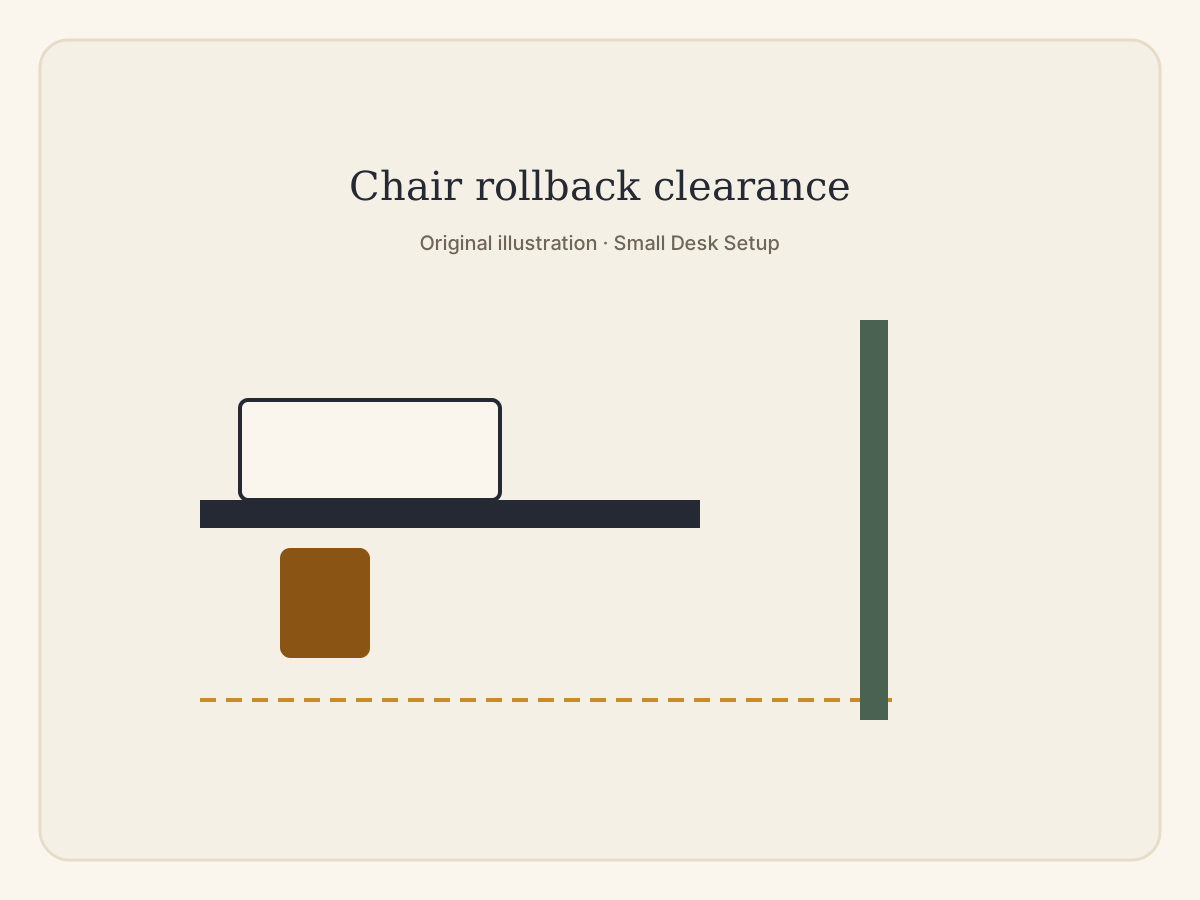
Chair rollback clearance
Width gets the listing photos. Rollback decides whether you can actually sit down. On a 31.5–47.2 in (80–120 cm) wall in a rented home, empty floor behind the seat is the difference between a corner that works and a chair that blocks the fridge. This page supports the desk size guide. It is inches, walk paths, and honest clearances — not medical “ideal posture distance,” and not a chair shop.
Tape the wall and the door. Without a tape this page is useless.
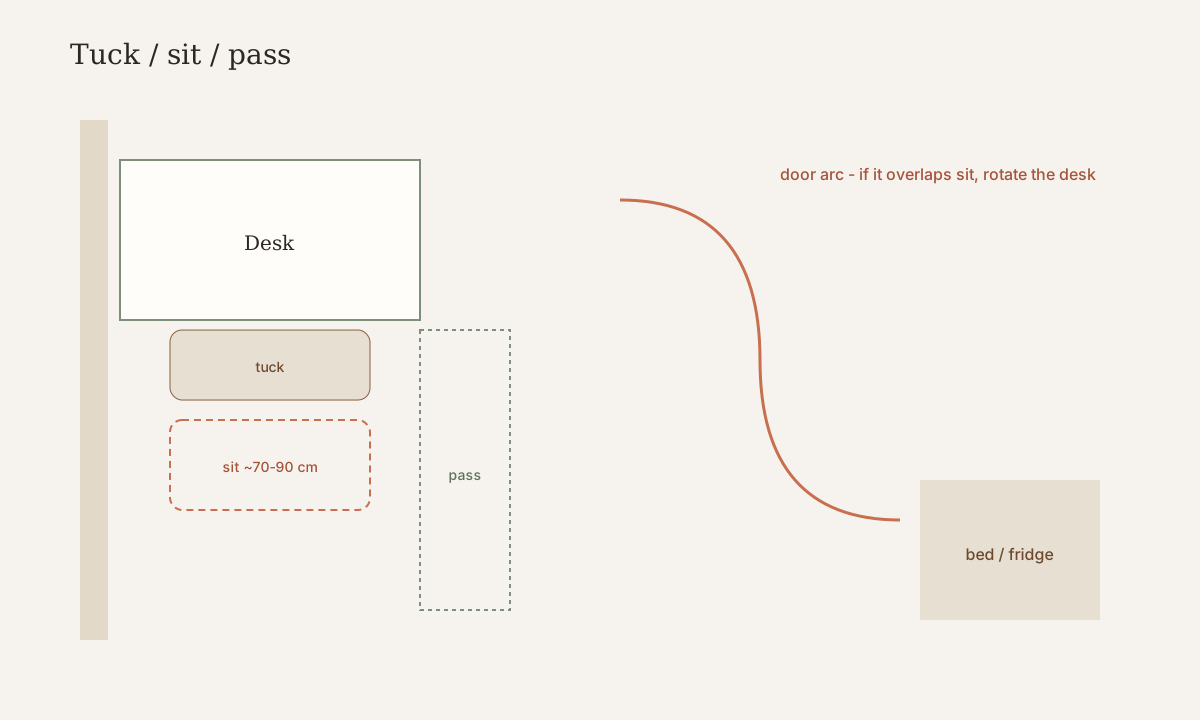
Three clearances to mark on the floor
Use painter’s tape. These are planning ranges to check against your furniture — not a fake lab, not copied from a brochure as if we tested it.
| Mode | What you are checking | Planning range to verify at home |
|---|---|---|
| Tuck | Chair fully under; room reads as closed | Seat hidden; walk path matches the rest of the room |
| Sit | Pull out, sit, type, stand without hitting a hard edge | Often ~27.6–35.4 in (70–90 cm) from wall to first obstacle for a rolling task chair; less for a tuck-under stool |
| Pass | A second person can still walk past | Keep a lane; if pass is zero, this is a one-person niche (hallway desks) |
Your chair is the source of truth. A bulky seat needs more than a dining chair. See chair footprint in a small bedroom.
Failure cases (fix the layout, not the cushion)
- Door arc overlaps rollback. Every exit shoves the chair. Rotate the desk or pick a wall that is not an arc.
- Bed corner eats the caster path. You cannot stand without waking the mattress. Move the desk or shorten hours — bedroom desk.
- Sit-stand frame needs more depth than the room has. Send that fight to folding vs corner vs sit-stand, not to a longer rollback fantasy.
Skip if
You have not measured the wall and the door with the door in your hand. Listings omit arcs.
Limits
Fit only. Typical ranges vary — confirm with tape on your floor.
What to look for (named examples)
Criteria first, then our constraint scores. Public-spec examples so you can search a real listing — not Amazon stars, and not a claim that we sat in a lab with a dozen desks.
Disclosure. Outgoing links go to the maker’s search or a generic retailer search until a partner tag is connected. After that, some links may be affiliate links — we may earn a commission if you buy, at no extra cost to you. Rankings on this site are our constraint scores (depth, leftover width, clamp, renter risk, cable drop). They are not Amazon stars or scraped reviews. We do not invent first-person lab tests.
IKEA
ÖRFJÄLL / compact task chair
Footprint 26.8 × 26.4 in (68 × 67 cm)
Our score 2.8 / 5 · depth 3 · width 3 · renter 3
- Solves: A lighter rolling seat than a wide mesh “office” chair when the bedroom rollback lane is tight.
- Fits: Sit clearance still ~27.6–35.4 in (70–90 cm) from wall to first obstacle; casters that match the floor you are allowed to mark.
- Skip if: You need a wide armrest chair and the nightstand already owns the lane — a dining chair may be the honest pick.
Public IKEA listing class: compact swivel chair, footprint often near 26.4–26.8 in (67–68 cm). Tape *your* seat, not the photo.
Check the current listing · search “IKEA ÖRFJÄLL chair”
Find what fits my space
When the wall is 31–47 in (80–120 cm) and the lease matters.