Updated 2026-09-02
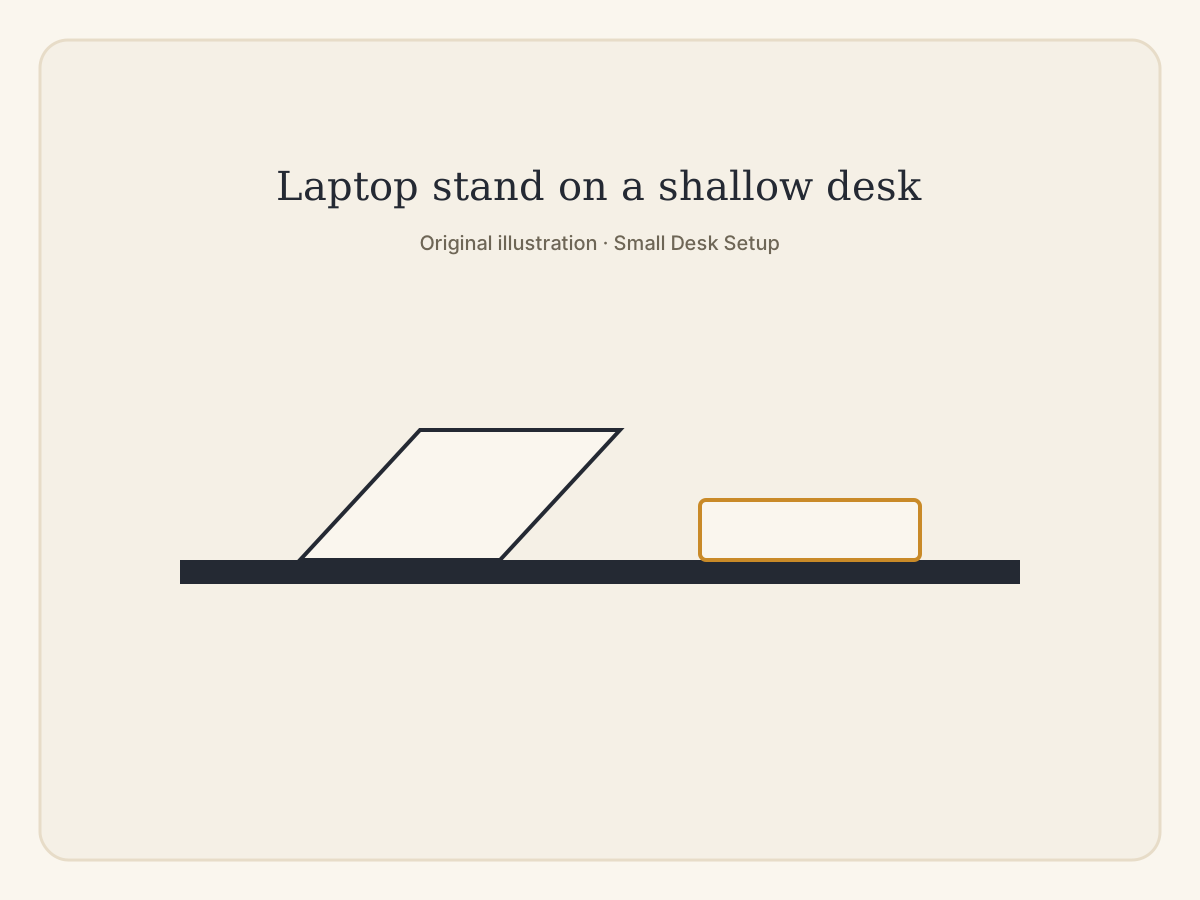
Laptop stand criteria on a shallow desk
A stand can lift a screen. On a 15.7–23.6 in (40–60 cm) rented top it can also steal the only strip you had for wrists and a notebook. This page is category criteria — not ranked models, not medical posture treatment, and not a “we tested N stands” roundup.
Measure depth, leftover room for an external keyboard, and whether the screen then faces a pillow. Companion: desk depth for laptop plus notebook. Bedroom: bedroom desk.
Measure first (comfort preference, not a clinic)
Tape:
- Top depth after the lip and any wall baseboard.
- Stack height you actually like for the lid (preference, not a prescribed “eye line”).
- Keyboard leftover if you would type off-laptop: full-size boards need more than a compact one.
If the stand’s rear foot hangs off a 17.7 in (45 cm) top, skip that format.
Format fork
No stand if depth is ~40 cm and you still need a notebook in the same strip. The laptop stays closed-ish or at a gentle lid angle. A stand here is a luxury the wall did not fund.
Low wedge if you keep typing on the laptop. Know the hinge: a wedge that forces a sharp lid angle on a shallow top often throws glare into a window (window glare).
Higher stand + external keyboard only if depth still fits keyboard + a palm rest after the stand’s footprint. If the keyboard hangs off the front edge, you did not gain a screen — you lost a desk.
Monitor as a second panel is a different question: one-monitor intentional setup and monitor arm on a narrow desk. Do not add a stand and a monitor on 40 cm.
Skip if
- The raised screen faces the pillow or a partner on the sofa.
- The stand needs a clamp on glass or a crumbly lip — see no-drill hardware and arm notes.
- You would need a second tray for the laptop that used to close into a drawer at shutdown.
Then type on the laptop, or move to a deeper top.
Limits
Gear-category and fit only. Typical footprints vary — check your stand’s feet against your depth.
What to look for (named examples)
Criteria first, then our constraint scores. Public-spec examples so you can search a real listing — not Amazon stars, and not a claim that we sat in a lab with a dozen desks.
Disclosure. Outgoing links go to the maker’s search or a generic retailer search until a partner tag is connected. After that, some links may be affiliate links — we may earn a commission if you buy, at no extra cost to you. Rankings on this site are our constraint scores (depth, leftover width, clamp, renter risk, cable drop). They are not Amazon stars or scraped reviews. We do not invent first-person lab tests.
IKEA
LÅNESPELARE laptop stand
Footprint 10.2 × 10.2 in (26 × 26 cm) · Height 6.3 in (16 cm)
Our score 4.0 / 5 · depth 3 · width 5 · renter 5
- Solves: Raises the laptop so an external keyboard can reclaim the front strip on a shallow top.
- Fits: Depth still ≥ 17.7 in (45 cm) after the stand’s feet; you will type on a separate keyboard, not the laptop deck.
- Skip if: A 15.7 in (40 cm) desk where the stand plus keyboard erase the notebook band — type on the laptop or change the top.
Public IKEA listing: compact bamboo-style stand, about 10.2 × 10.2 × 6.3 in (26 × 26 × 16 cm). Confirm current feet against your depth.
Check the current listing · search “IKEA LÅNESPELARE laptop stand”
Find what fits my space
When the wall is 31–47 in (80–120 cm) and the lease matters.