Updated 2026-09-02
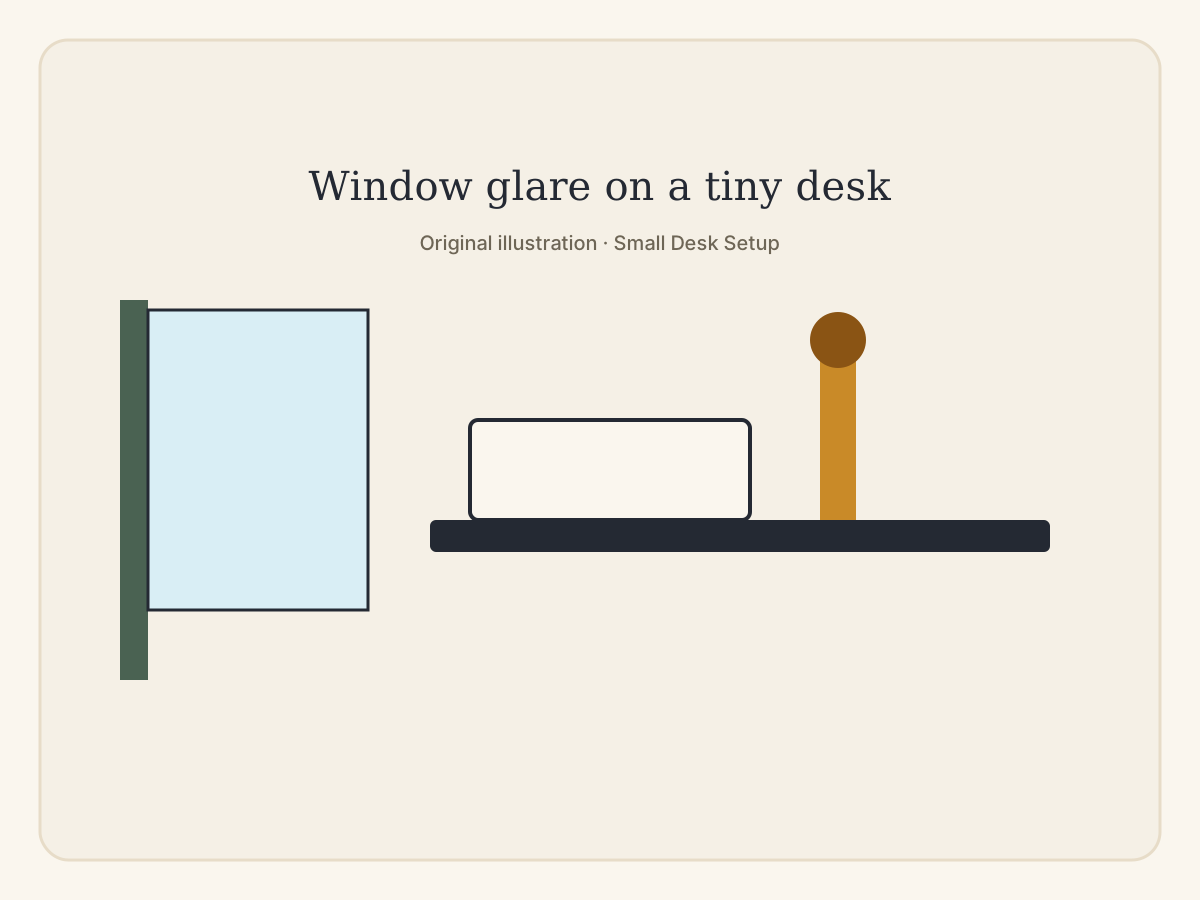
Window glare on a tiny desk
A window-wall desk in a studio looks like a prize until noon hits the panel. On a 15.7–19.7 in (40–50 cm) top there is no room to “just push the screen back.” This page is layout vs glass: how to keep one laptop or one monitor readable without turning the rest of a rented room into a cave.
This is not medical advice about eyes or migraines, not a film ranking, and not a claim that a Kelvin number treats strain. Measure your own sill, handle, and curtain drop. Pair this with the desk size guide and small-apartment work corners when you are still choosing which wall gets the desk.
Measure the glass job, not the furniture listing
Tape three things before you rotate anything:
- Usable depth after the sill lip, window handle, and the curtain when it hangs still. Listings lie; the handle often steals 1.2–2.4 in (3–6 cm).
- Facing. Does the screen face the glass, sit parallel to it, or can the desk rotate 90° without blocking a door?
- Radiator / convector gap. Do not jam the rear edge against fins. Leave the clearance the heater needs, even if that makes the top shallower.
If usable depth falls under ~15.7 in (40 cm) after those deductions, treat this as a laptop-only stopgap and read desk depth for laptop plus notebook before you add a stand.
Default move: perpendicular to the glass
On 40–50 cm depth, sit so the window is beside you, not behind the screen and not straight into your face. A 90° rotation is the cheapest anti-glare tool you already own.
- Screen parallel to the glass (you face down the wall) usually wins over screen facing the view.
- If the only chair position puts a bright rectangle in the panel, rotate before you buy a matte film. Film is a last patch, not a layout.
- Keep the front 10–12 in (25–30 cm) of the top clear so you can angle the lid a few degrees without a mug in the way — same habit as a calmer desk corner.
Skip this wall if the only seat puts your back hard on the door and the screen still eats the window. A side wall with the window as light, not as the work surface, is the honest upgrade.
Sheer by day, denser drape after hours
You do not need a blackout cave at 11:00. You need control.
- Day: a sheer or light linen that cuts sparkle but keeps the room alive. Pull it so the fabric hangs beside the screen, not bunched on the sill eating depth.
- After hours: a denser drape or a second layer if streetlights bounce off night glass into a pillow. Bedroom offices: never leave a bright disc in the sleeping cone — see bedroom desk without wrecking sleep.
- Lease. Tension or existing rails beat drilling a blackout track. Hardware ranking lives on no-drill hardware for renters.
Named fabrics, not brand lists. If glare control would require a rail the lease forbids, move the desk.
Task lamp on the non-window side
Night glass is a mirror. A lamp on the window side paints a bright disc on the pane and often into the pillow or sofa.
Put the task lamp on the room side of the keyboard so the beam washes the keys, not the glass. Clamp vs base vs monitor bar is category criteria on desk lamp criteria for tiny desks — here the rule is only: window side stays dark-ish; work light stays inboard.
Kill the desk lamp at shutdown even if the room lamp stays on for living.
When the window wall fails
Abandon the window as a desk when any of these are true:
- Usable depth under ~40 cm after sill, handle, and drape.
- The heater forbids a rear gap and the top becomes a sill with a laptop fantasy.
- The only seat puts your back on the door with no rotate left.
- Glare control needs a drilled rail you cannot install.
Then the window stays light, and the desk moves to a side wall, an alcove with honest rollback, or a dining-table kit that packs. A pretty view is not a setup.
Limits
Layout and household caution only. Typical sizes vary — measure your glass, follow your lease, and keep the walk path.
What to look for (named examples)
Criteria first, then our constraint scores. Public-spec examples so you can search a real listing — not Amazon stars, and not a claim that we sat in a lab with a dozen desks.
Disclosure. Outgoing links go to the maker’s search or a generic retailer search until a partner tag is connected. After that, some links may be affiliate links — we may earn a commission if you buy, at no extra cost to you. Rankings on this site are our constraint scores (depth, leftover width, clamp, renter risk, cable drop). They are not Amazon stars or scraped reviews. We do not invent first-person lab tests.
IKEA
TERTIAL work lamp (clamp)
Our score 4.2 / 5 · depth 5 · width 5 · renter 4
- Solves: Task light without a base stealing 15.7–19.7 in (40–50 cm) of depth.
- Fits: A solid rear or side lip the clamp can bite; beam aimed at the keyboard zone, not the pillow.
- Skip if: Glass edge, crumbling veneer, or a fold-away top that must close flat against the clamp body.
Public IKEA listing: clamp work lamp, articulated arm. Confirm shade size against your sit-test glare.
Check the current listing · search “IKEA TERTIAL clamp lamp”
Find what fits my space
When the wall is 31–47 in (80–120 cm) and the lease matters.